Roof Smart: smarter roofing starts here
A resource hub of expert guides, FAQs and practical insight to help homeowners and contractors choose the right roofing system for their property, climate and budget.
Is your roof breathing?
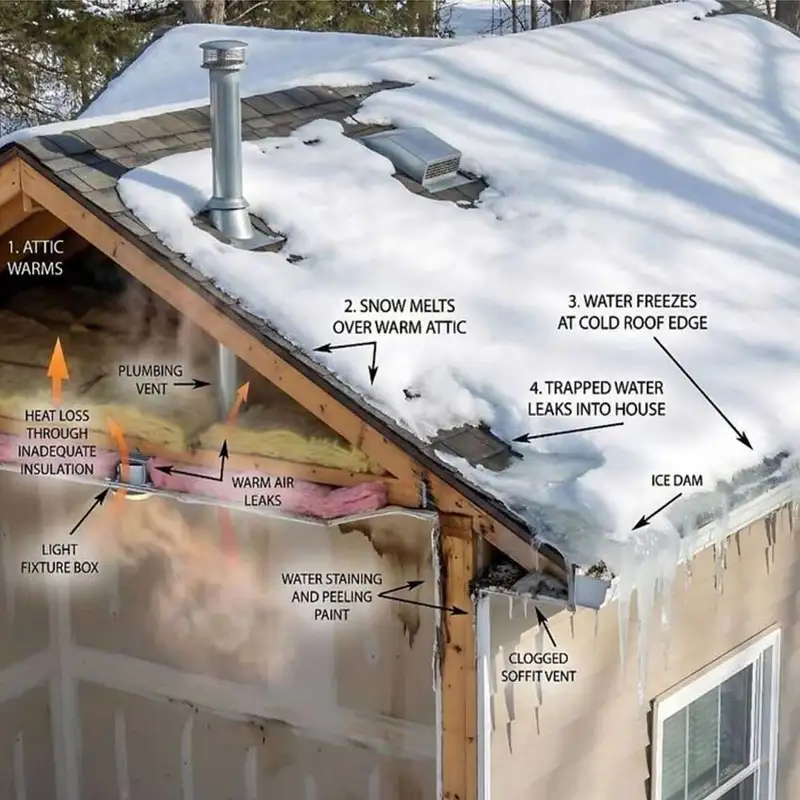
A roof's worst enemy isn't just rain — it's trapped heat. Proper attic ventilation balances the home's temperature. Without it, heat builds up, snow melts unevenly, ice dams form, and the trapped moisture causes structural damage and leaks.
In harsh-winter regions, ventilation is essential for structural health. Our job is to make sure the roof has the intake and exhaust it needs; for keeping heat inside the living space, we'll often recommend an insulation specialist too.
Know your roof type
Identifying your roofline is the first step to understanding what your roof needs. The most common styles we work on:
Gable roof
The classic triangular design — two sloping sides meeting at a ridge.
Cross-gabled roof
Two or more gable rooflines intersecting at a valley.
Simple hipped roof
Slopes on all four sides meeting at a central ridge.
Pyramid hip roof
Four equal triangular slopes meeting at a single centre point.
Cross-hipped roof
Two or more hipped rooflines intersecting at a valley.
Saltbox roof
A long asymmetrical design — short front slope, longer steeper back.
Flat roof
Nearly level, with a slight pitch built in for drainage.
Gambrel roof
Two distinct slopes each side, with much steeper lower slopes.
Mansard roof
Four double-sloped sides — steep lower, nearly flat upper.
Calculate your ventilation needs
Use our ventilation calculator to estimate the net free area your attic needs under the 1/300 rule — then we'll confirm the right system for your roof.
Roof Smart questions
Manage snow buildup, prevent ice dams, keep gutters clear, monitor attic temperature, and inspect after storms. Scheduling a professional inspection before the season is the simplest way to stay ahead of trouble.
It's gentle on materials (it won't corrode aluminum gutters or dry out shingles), it has superior melting power because it generates its own heat, and it's fast-acting. Pro tip: fill a nylon stocking with calcium chloride and lay it vertically across the ice dam to create a channel for trapped water to drain off the roof.
It depends on the pitch. At 2:12 and below, shingles aren't recommended — use a membrane system like EPDM or TPO. Between 2:12 and 3:12 is a grey area where Ontario snow loads often make a membrane the safer call. At 4:12 and above you're in the ideal "shingle zone." Ice maintenance is required at any pitch.
Request a free estimate
Tell us about your roof and we'll follow up to book an on-site assessment. Prefer to talk? Call or text (705) 325-1805.